

You have a test tomorrow and barely any time left. This situation feels stressful, yet it is more common than you think. Research from the National Center for Education Statistics shows that over 70 percent of students admit to last minute studying at least once. Meanwhile, cognitive studies suggest that focused short bursts of study can still improve recall if done correctly. So yes, you can still make progress in one night. This guide explains exactly how to study for a test in one night using smart, proven methods that help you retain more in less time.
The Goal of One Night Studying
Before you open your books, you need the right mindset. You are not trying to master the entire subject. Instead, your goal is to:
- Cover high priority topics
- Understand key concepts
- Improve recall speed
- Avoid burnout
When you accept this, you stop wasting time chasing perfection. Instead, you focus on efficiency.
Step 1: Gather Everything You Need First
Start by organizing your materials. This step saves you from constant distractions later.
Collect:
- Class notes
- Textbooks
- Past papers
- Study guides
- Slides or handouts
Also prepare:
- Water
- Light snacks
- A quiet workspace
Once everything is ready, you can enter a focused study state without interruption.
Step 2: Identify What Actually Matters
Not all topics carry equal weight. Therefore, you need to prioritize smartly.
Focus on:
- Topics your teacher emphasized
- Frequently repeated questions
- Key formulas or definitions
- Chapters with high exam weight
If you have access to past papers, scan them quickly. You will notice patterns. Those patterns guide your study plan.
Step 3: Use Active Recall Instead of Passive Reading
Many students read notes repeatedly. However, this method feels productive but works poorly.
Instead, use active recall. This means you test yourself constantly.
For example:
- Close your book and explain a concept aloud
- Write down everything you remember
- Use flashcards
- Answer practice questions
This approach forces your brain to work harder. As a result, you remember more in less time.
Step 4: Apply the Pomodoro Technique for Focus
Studying all night without structure leads to burnout. Therefore, break your time into focused sessions.
Use this structure:
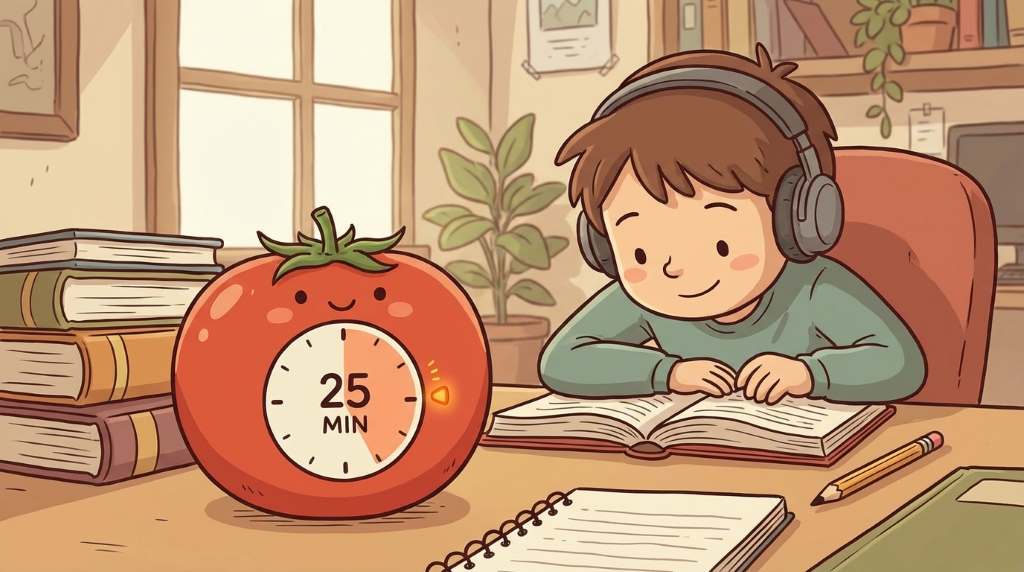
- Study for 25 minutes
- Take a 5 minute break
- Repeat 4 times
- Take a longer 20 minute break
This method keeps your mind fresh. It also prevents fatigue from building too quickly.
Step 5: Focus on Understanding First, Then Memorizing
Many people try to memorize everything immediately. That approach fails when concepts are complex.
Instead:
- Understand the idea
- Simplify it in your own words
- Then memorize key details
For example, if you study biology, understand how a process works before memorizing terms. This creates stronger mental connections.
Step 6: Use the Feynman Technique
This technique is simple but powerful. You learn by teaching.
Here is how to use it:
- Pick a topic
- Explain it as if teaching a beginner
- Identify gaps in your explanation
- Review and simplify again
When you struggle to explain something, you find exactly where you need to improve.
Step 7: Make Quick Summary Notes
Instead of copying full chapters, create condensed notes.
Focus on:
- Key points
- Formulas
- Definitions
- Diagrams
Keep your notes short and clear. Use bullet points when possible. These notes will help during your final revision.
Step 8: Practice Questions Are Your Best Friend
If you have limited time, practice questions give the highest return.
They help you:
- Understand exam patterns
- Improve time management
- Identify weak areas
Start with easier questions. Then move to harder ones. This builds confidence quickly.
Step 9: Use Mnemonics and Memory Tricks
When time is short, memory tricks can save you.
Examples include:
- Acronyms
- Rhymes
- Visual associations
For instance, if you need to remember a list, turn it into a funny sentence. Your brain remembers unusual patterns better.
Step 10: Avoid Multitasking at All Costs
You may feel tempted to check your phone or switch subjects constantly. However, multitasking reduces efficiency.
Instead:
- Turn off notifications
- Use website blockers if needed
- Stick to one topic per session
Deep focus beats scattered attention every time.
Step 11: Take Strategic Breaks
Breaks are not a waste of time. They are necessary for performance.
During breaks:
- Stretch your body
- Drink water
- Walk around
Avoid scrolling social media. That drains mental energy instead of restoring it.
Step 12: Use Visual Learning When Possible
Visual aids can speed up understanding.
Try:
- Diagrams
- Charts
- Mind maps
For subjects like science or history, visual tools help connect ideas quickly.
Step 13: Study Difficult Topics Early
Your brain works best at the beginning of your study session.
Therefore:
- Start with the hardest topics
- Move to easier ones later
This ensures you use your peak focus wisely.
Step 14: Stay Hydrated and Eat Smart
Your brain needs fuel to function properly.
Choose:
- Water
- Fruits
- Nuts
- Light meals
Avoid heavy or greasy food. It makes you sleepy and reduces concentration.
Step 15: Get at Least Some Sleep
Pulling an all nighter might sound productive. However, sleep plays a major role in memory.
Even 3 to 5 hours of sleep can:
- Improve recall
- Boost focus
- Reduce mistakes
If possible, review briefly before sleeping. This helps your brain store information better.
Step 16: Quick Morning Revision
Before your test, do a light review.
Focus on:
- Key formulas
- Summary notes
- Difficult concepts
Do not try to learn new topics at this stage. Instead, reinforce what you already studied.
Related:
Why Should I Choose a Corporate Job?
How our environment directs our goals
Common Mistakes to Avoid
Many students waste time without realizing it.
Avoid these mistakes:
- Re reading without testing yourself
- Studying everything equally
- Skipping practice questions
- Ignoring sleep completely
- Studying in a distracting environment
Fixing these mistakes alone can improve your results significantly.
Sample One Night Study Plan
Here is a simple structure you can follow:
6:00 PM to 7:00 PM
Organize materials and identify key topics
7:00 PM to 9:00 PM
Study hardest subjects using active recall
9:00 PM to 9:30 PM
Break and light snack
9:30 PM to 11:30 PM
Practice questions and revise notes
11:30 PM to 12:00 AM
Quick review of summaries
Sleep for 4 to 5 hours
Morning
Light revision and mental preparation
This plan keeps your energy balanced while maximizing learning.
How to Stay Calm Under Pressure
Stress can block your ability to think clearly. Therefore, managing it is essential.
Try:
- Deep breathing
- Positive self talk
- Short breaks
Remind yourself that progress matters more than perfection.
Conclusion
Studying for a test in one night is not ideal, yet it is absolutely possible to improve your performance. The key is to focus on high value strategies like active recall, smart prioritization, and consistent breaks. Instead of trying to learn everything, you should aim to understand and retain the most important concepts. With the right approach, even a single night can make a real difference. Start now, stay focused, and give your best effort.
FAQs
How effective is studying one night before a test?
It can be effective if you use focused methods like active recall and practice questions. While it is not ideal for long term learning, it can improve short term performance.
Should I stay awake all night to study?
No. Lack of sleep reduces memory and focus. Even a few hours of sleep helps your brain retain information better.
What is the fastest way to memorize information?
Use active recall, repetition, and memory tricks like mnemonics. Teaching the concept to yourself also speeds up learning.
How do I avoid forgetting what I studied overnight?
Review key points before sleeping and again in the morning. This reinforces memory and improves recall.
Can I pass a test with one night of studying?
Yes, especially if you focus on important topics and practice questions. Your result depends on how efficiently you use your time.




Leave a Reply