
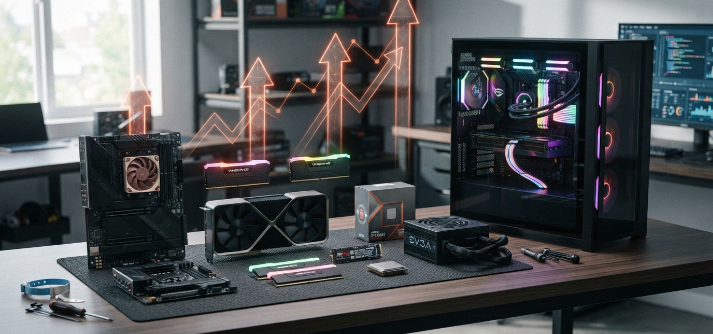
Computer parts are becoming more costly mainly because demand for memory, storage, and high-performance chips has risen faster than supply. The rapid expansion of AI data centers is putting particular pressure on DRAM, NAND flash, and other semiconductor components used in computers.
This does not mean every computer component is increasing in price at the same rate. Memory and storage have been especially affected, while graphics cards can also become more expensive when supply is tight or demand rises. The result is a higher cost for building, upgrading, or buying a computer.
AI Demand Is Putting Pressure on Computer Hardware
The biggest reason essential computer parts are becoming more expensive is the rapid growth of AI infrastructure. AI servers require large quantities of high-performance memory and storage, allowing data-center operators to compete with PC manufacturers and other buyers for limited semiconductor capacity.
Companies operating large cloud platforms are investing heavily in AI servers. Lenovo, for example, reported that its AI-related revenue rose 60% year over year in its fiscal first quarter of 2026, while its AI server pipeline reached $54 billion.
Why AI Needs So Much Memory
AI workloads require substantial amounts of memory because large models process enormous datasets. High-bandwidth memory, server DRAM, and enterprise SSDs are therefore receiving greater attention from semiconductor manufacturers.
TrendForce reported that memory manufacturers have been shifting capacity toward HBM and server applications because of strong AI-server demand. That leaves less production capacity for conventional PC memory.
This creates an important chain reaction: data centers buy more memory, manufacturers prioritize higher-margin products, PC suppliers receive less capacity, and consumers eventually face higher prices.
RAM and SSD Prices Are Rising Because Supply Is Tight
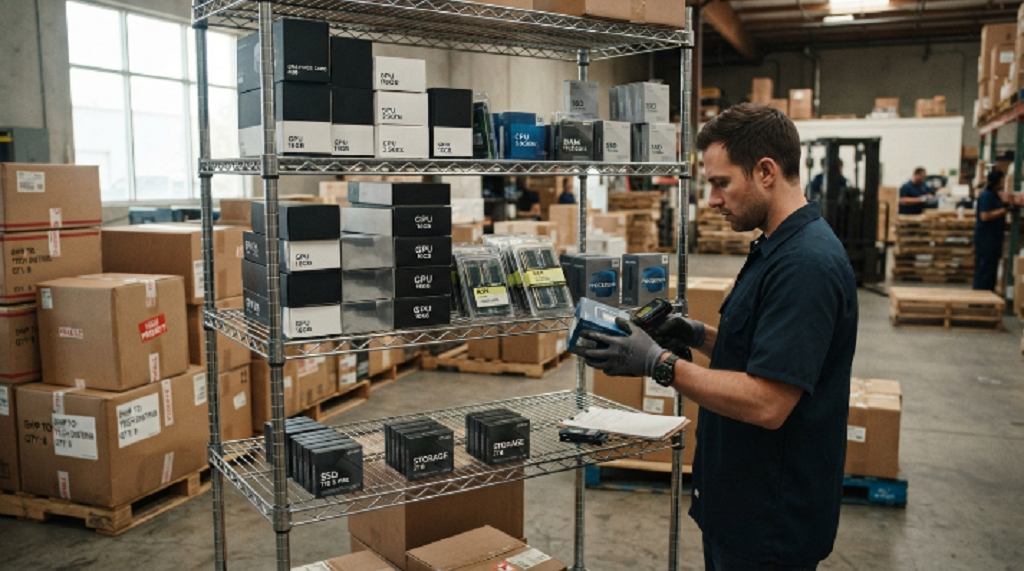
RAM and SSDs have been among the most affected computer components because both depend heavily on DRAM and NAND flash memory markets. When manufacturers redirect production toward servers and enterprise customers, consumer products can become more expensive even when PC demand itself is not particularly strong.
TrendForce forecast that conventional DRAM contract prices would rise 13% to 18% quarter over quarter in the third quarter of 2026. NAND flash contract prices were also expected to increase by 10% to 15%.
Earlier in 2026, the increases were considerably sharper. TrendForce projected a 90% to 95% quarter-over-quarter increase in conventional DRAM contract prices for the first quarter and a 55% to 60% increase for NAND flash.
These are contract-market figures, not direct predictions that every retail RAM kit or SSD will rise by the same percentage. Retail prices also depend on inventory, brand, capacity, exchange rates, distribution costs, and local taxes.
Why SSDs Are Also Affected
SSDs use NAND flash, the same basic memory technology that is experiencing strong demand from enterprise storage.
AI systems generate and process enormous quantities of data, increasing demand for high-capacity enterprise SSDs. TrendForce reported that enterprise SSD demand was becoming the largest NAND application segment in 2026, while consumer SSD availability was being squeezed.
For consumers, this means a seemingly ordinary 1TB or 2TB SSD can become more expensive even though its underlying technology has not suddenly changed.
Graphics Cards Face Their Own Supply and Demand Problems
Graphics cards can become more expensive for several reasons, including semiconductor costs, memory availability, manufacturing capacity, exchange rates, and demand from gamers and AI-related workloads.
The current GPU market also shows how retail pricing can move independently of official launch prices. In August 2026, Tom’s Hardware reported substantial increases in median U.S. retail prices for several Nvidia RTX 50-series cards, with some models showing increases of more than 25% compared with earlier pricing levels.
AI is an important part of the wider demand story, although consumer GPUs and data-center accelerators are not interchangeable products. AI companies generally purchase specialized hardware designed for large-scale computation, while gamers and ordinary PC users buy consumer graphics cards.
The important point is that the semiconductor industry has finite manufacturing capacity. Strong demand in one part of the market can influence component availability and investment decisions elsewhere.
Semiconductor Manufacturing Cannot Expand Overnight
Another reason computer parts remain expensive is that semiconductor production cannot be increased quickly. Building and equipping advanced manufacturing facilities requires substantial investment, specialized equipment, skilled workers, and long lead times.
Manufacturers therefore have to decide where limited production capacity will generate the best returns. In the current market, server memory and AI-related products can be more attractive than some consumer components.
TrendForce has described this as a structural shift in the memory market, with suppliers prioritizing higher-margin server applications while consumer supply remains constrained.
This helps explain why weak consumer demand does not automatically result in cheaper RAM or SSDs. If manufacturers reduce or redirect consumer-oriented production, lower demand may not be enough to create a large surplus, Rising computer prices can also affect students who depend on technology for education. Understanding foundational learning skills remains equally important, including Why Is It Important to Learn Phonological Awareness Skills.
Higher Component Costs Eventually Reach Computer Buyers
Computer manufacturers do not absorb every increase in component costs indefinitely. When RAM, SSDs, processors, graphics hardware, displays, or other components become more expensive, manufacturers have several choices.
They can raise the retail price, reduce specifications, lower their profit margin, or use cheaper components. In practice, companies may use a combination of these approaches.
Lenovo recently reported that it was increasing PC prices and moving toward premium segments as it dealt with higher costs and changing market conditions.
Why Prebuilt PCs May Become More Expensive
A prebuilt computer contains many components whose prices can change independently. A rise in memory prices might therefore increase the cost of an entire system even if the CPU and motherboard remain relatively stable.
Manufacturers may also adjust configurations. For example, a computer that might previously have been sold with a larger SSD could be offered with less storage to keep its advertised price competitive.
This is why shoppers should look beyond the headline price and compare the complete specification.
Currency, Shipping, and Local Market Conditions Also Matter
Global component prices are only part of the final price paid by consumers. Local computer markets add distribution costs, taxes, shipping expenses, retailer margins, and currency fluctuations.
This is particularly important when buying imported hardware. A component can become more expensive locally even when its international price changes only modestly if the local currency weakens against the currency used for imports.
Supply shortages can also affect smaller markets more severely because distributors may have fewer units available and less negotiating power with international suppliers.
For buyers, this means that a global hardware-price trend should be treated as an indication rather than an exact prediction of local retail prices.
What Should You Do If You Need a Computer Now?
The best approach is not necessarily to buy everything immediately. Instead, identify which components are actually affected by current market conditions and avoid paying a premium for unnecessary upgrades.
Prioritize Components That Affect Your Work
If your computer needs more RAM or storage, upgrade those components based on your actual workload. A student performing everyday browsing and office work does not necessarily benefit enough from extremely expensive high-capacity memory to justify the additional cost.
For gaming, the GPU usually deserves more attention than cosmetic upgrades. For video editing, 3D work, or professional applications, additional RAM, faster storage, and stronger graphics hardware may provide more meaningful benefits.
Compare Complete Systems, Not Just Individual Parts
One useful strategy is to compare the cost of building a PC with the price of a similarly specified prebuilt system.
When memory and storage prices are unusually high, manufacturers that purchased components under earlier contracts may sometimes offer better system-level pricing than individual retailers. This is not guaranteed, but it is a reason to compare both options before buying.
Avoid Paying for Capacity You Will Not Use
High component prices make unnecessary specifications more costly. Buying a larger SSD or RAM kit simply because it is available can waste money.
A better approach is to determine your actual requirements and leave room for a future upgrade when the market becomes more favorable.
Will Computer Parts Become Cheaper Again?
Computer parts can become cheaper when semiconductor supply catches up with demand, but the timing is difficult to predict. Memory markets are cyclical, so periods of shortage and high prices can eventually be followed by increased production and weaker pricing.
However, the current situation has an unusual factor: AI infrastructure continues to create strong demand for memory and storage.
TrendForce’s July 2026 research indicated that DRAM supply remained constrained because of strong demand for HBM and server memory, while capacity reallocation continued to squeeze traditional memory products.
That means consumers should not assume that prices will immediately return to the unusually low levels seen during previous memory-market downturns.
The most sensible strategy is to buy when a component is necessary rather than trying to predict the exact bottom of the market.
Frequently Asked Questions
Why are computer parts becoming more expensive?
The main factors are stronger AI and data-center demand, limited semiconductor capacity, and manufacturers shifting production toward higher-margin server products. RAM and SSDs have been particularly affected because they depend on DRAM and NAND flash.
Why is RAM so expensive right now?
RAM prices are being influenced by tight DRAM supply and strong demand from servers and AI infrastructure. Manufacturers are allocating more capacity to server-related products, which can reduce the supply available for consumer PC memory.
Are SSD prices also going up?
Yes. NAND flash prices have also been under pressure because enterprise SSD demand is growing rapidly alongside AI and data-center expansion. Consumer SSD supply can therefore become tighter even when PC demand is relatively weak.
Should I buy a computer now or wait?
If you need a computer for school, work, or gaming, waiting indefinitely for prices to fall can be risky. Compare current prices, prioritize the components you actually need, and consider a prebuilt system if its total cost is lower than buying equivalent parts separately.
Will computer hardware prices eventually fall?
They can fall when supply expands or demand weakens, particularly because semiconductor markets are cyclical. However, the continuing expansion of AI infrastructure makes the timing of a major decline uncertain.
Conclusion
The rising cost of essential computer parts is not caused by a single problem. AI infrastructure is increasing demand for memory and storage, semiconductor manufacturers are prioritizing profitable server products, and limited production capacity is putting pressure on consumer components.




Leave a Reply