
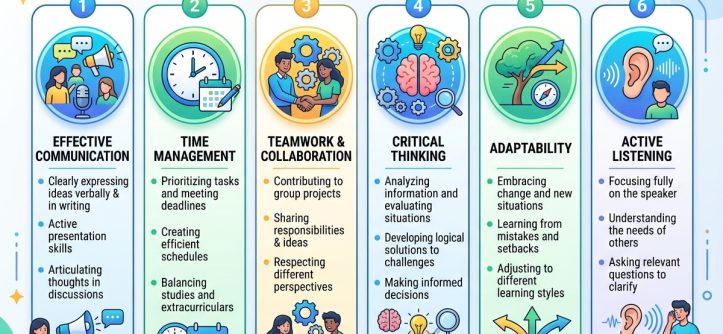
Success in education is not determined by grades alone. While academic knowledge is important, students also need practical skills that help them communicate, solve problems, work with others, and adapt to new situations. These abilities, commonly known as soft skills, influence how students perform in school, interact with others, and prepare for future careers.
Employers, universities, and organizations increasingly value soft skills because they complement technical knowledge. A student who can communicate clearly, manage time effectively, and work well in a team often stands out from others with similar academic qualifications. Developing these skills early creates a strong foundation for lifelong learning and professional growth.
This article explains what soft skills are, why they matter, the different types of soft skills students should develop, and practical ways to strengthen them.
What Are Soft Skills?
Soft skills are personal qualities, habits, and interpersonal abilities that influence how people communicate, work, and solve problems. Unlike technical skills, which are learned for specific tasks or professions, soft skills apply across almost every aspect of life.
For example, knowing how to operate a computer program is a technical skill. Communicating effectively with classmates while completing a group project is a soft skill.
Soft skills shape attitudes, behavior, and decision-making. They help students build positive relationships, overcome challenges, and adapt to changing environments. Since these abilities are transferable, they remain valuable regardless of the career path a student eventually chooses.
Why Soft Skills Are Important for Students
Developing strong skills beyond academics provides long-term advantages. Students with well-developed soft skills often perform better in classrooms because they manage responsibilities effectively and communicate confidently.
These skills also improve confidence. Students who know how to express ideas clearly, resolve conflicts respectfully, and organize their time are more likely to participate in discussions and leadership opportunities.
Furthermore, soft skills prepare students for university, internships, and employment. Modern workplaces value employees who can collaborate, think critically, and adapt to new technologies just as much as they value technical expertise.
Strong soft skills also contribute to personal growth by improving emotional intelligence, resilience, and self-awareness.
Communication
Communication remains one of the most valuable skills every student should develop. It involves expressing thoughts clearly while also listening carefully to others.
Good communication includes speaking, writing, and non-verbal communication such as body language and eye contact. Students who communicate effectively understand instructions more easily, contribute confidently during discussions, and build stronger relationships with classmates and teachers.
Improving communication does not require dramatic changes. Reading regularly, participating in presentations, asking thoughtful questions, and practicing active listening gradually strengthen this essential skill.
Time Management
Managing time effectively helps students balance academic responsibilities with personal life.
Poor time management often leads to missed deadlines, unnecessary stress, and reduced productivity. In contrast, students who organize their schedules complete assignments more efficiently and still have time for hobbies and relaxation.
Useful time management habits include:
- Creating weekly study schedules.
- Breaking large assignments into smaller tasks.
- Setting realistic daily goals.
- Prioritizing important responsibilities before less urgent activities.
Learning to manage time early benefits students throughout their education and future careers.
Critical Thinking
Critical thinking enables students to analyze information objectively before making decisions.
Rather than accepting information immediately, students with strong critical thinking skills ask questions, evaluate evidence, compare viewpoints, and consider possible consequences.
This ability becomes increasingly important as students conduct research, solve complex problems, and navigate the large amount of information available online.
Critical thinking encourages independent learning and helps students make informed decisions both inside and outside the classroom.
Problem-Solving
Challenges are part of every educational journey. Strong problem-solving skills help students respond calmly instead of becoming discouraged.
Problem-solving involves identifying the issue, gathering information, considering possible solutions, and selecting the most appropriate approach.
Students develop this skill by participating in group projects, science experiments, debates, and real-life situations that require thoughtful decision-making.
Employers consistently rank problem-solving among the most desirable workplace skills because every profession requires individuals who can respond effectively to unexpected situations.
Teamwork and Collaboration
Very few achievements happen entirely alone. Students regularly work with classmates during projects, presentations, and extracurricular activities.
Teamwork requires cooperation, respect, flexibility, and accountability. Students learn to appreciate different perspectives while contributing toward shared objectives.
Effective collaboration includes:
- Listening respectfully to different opinions.
- Completing assigned responsibilities on time.
- Supporting teammates during challenges.
- Resolving disagreements professionally.
These teamwork skills remain valuable throughout university and professional careers.
Leadership
Leadership is not limited to becoming a class representative or club president. It means taking responsibility, motivating others, and making thoughtful decisions.
Students develop leadership by volunteering, organizing activities, mentoring younger students, or taking initiative during group assignments.
Good leaders also demonstrate honesty, accountability, empathy, and effective communication. These qualities inspire trust and encourage teamwork.
Leadership skills continue to grow through experience rather than position.
Adaptability
The world changes rapidly. New technology, different teaching methods, and changing career requirements make adaptability one of the most important skills students can develop.
Adaptable students respond positively to change instead of resisting it. They remain open to learning new methods, adjusting study techniques, and developing additional knowledge when necessary.
Adaptability also reduces stress because students become more comfortable handling unexpected situations.
Emotional Intelligence
Emotional intelligence refers to understanding and managing emotions while recognizing the feelings of others.
Students with high emotional intelligence remain calm during stressful situations, communicate respectfully, and resolve conflicts more effectively.
Emotional intelligence includes:
- Self-awareness.
- Self-control.
- Empathy.
- Motivation.
- Social awareness.
These abilities improve relationships, reduce misunderstandings, and support better decision-making.
Creativity
Creativity extends beyond art and music. It involves generating new ideas, approaching problems differently, and finding innovative solutions.
Creative thinking helps students write better essays, complete engaging presentations, and develop unique project ideas.
Reading widely, exploring hobbies, asking questions, and experimenting with different approaches all strengthen creativity over time.
Creative skills become increasingly valuable in careers where innovation drives success.
Decision-Making
Students make decisions every day, from managing study schedules to selecting future career paths.
Good decision-making involves gathering information, considering alternatives, evaluating risks, and accepting responsibility for outcomes.
Developing thoughtful decision-making skills helps students avoid impulsive choices and improves long-term planning.
This ability becomes especially valuable during university admissions and career selection.
Digital Communication
Technology has transformed education and the workplace. Students must understand how to communicate professionally through emails, online meetings, and collaborative platforms.
Digital communication also includes responsible online behavior, protecting personal information, and evaluating reliable sources of information.
Learning appropriate digital communication prepares students for both higher education and professional environments.
How Students Can Develop
They improve through consistent practice rather than memorization.
Students can strengthen these abilities by:
- Joining clubs and student organizations.
- Participating in debates and presentations.
- Volunteering in community activities.
- Taking leadership roles during projects.
- Reading books that broaden communication and critical thinking.
- Seeking constructive feedback from teachers and mentors.
Daily practice gradually transforms these activities into lifelong habits.
Common Mistakes Students Should Avoid
Some students focus entirely on academic results while neglecting personal development. Others avoid public speaking because they fear making mistakes.
Common mistakes include:
- Ignoring communication opportunities.
- Avoiding teamwork.
- Resisting constructive criticism.
- Poor time management.
- Depending entirely on technical knowledge.
Recognizing these habits allows students to improve before entering higher education or professional careers.
The Long-Term Value
Soft skills continue to provide benefits long after graduation. Universities appreciate students who participate actively and communicate respectfully. Employers seek professionals who collaborate effectively and adapt quickly.
Even entrepreneurs rely on communication, leadership, negotiation, and emotional intelligence to build successful businesses.
Unlike technical knowledge, which may become outdated as technology changes, soft skills remain valuable throughout every stage of life.
Final Thoughts
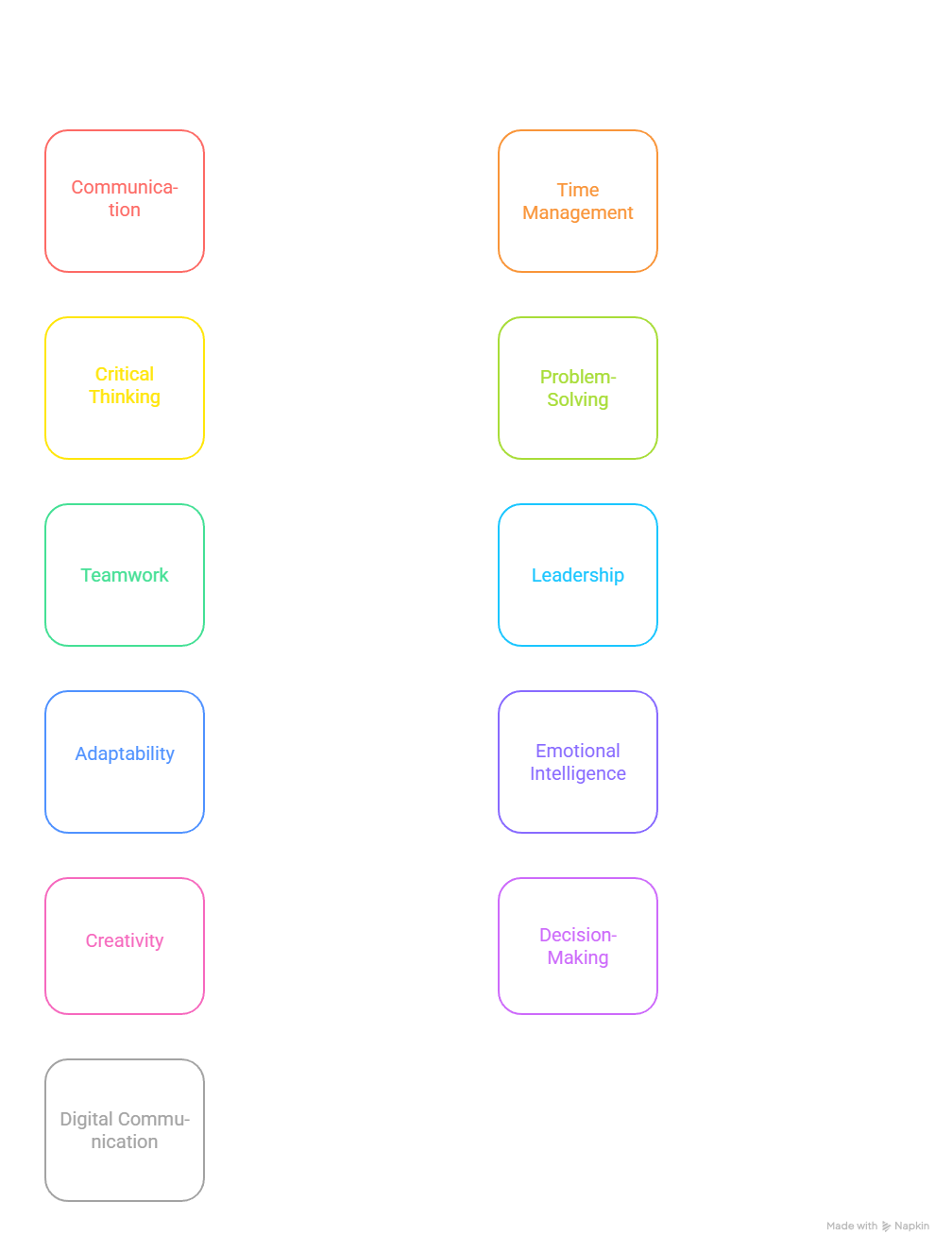
Developing essential skills goes beyond earning good grades. Soft skills such as communication, teamwork, critical thinking, leadership, adaptability, emotional intelligence, creativity, and time management prepare students for challenges both inside and outside the classroom.
These abilities strengthen academic performance, improve relationships, and increase career opportunities. Most importantly, they help students become confident, responsible, and adaptable individuals.
Building soft skills requires patience and consistent practice. Every presentation, group project, leadership opportunity, and meaningful conversation contributes to personal growth. By investing time in these essential skills today, students create a strong foundation for lifelong success in education, work, and everyday life.
(FAQ)
1. What are soft skills?
Soft skills are personal qualities and interpersonal abilities that help people communicate, collaborate, solve problems, and adapt to different situations. Unlike technical skills, they are applicable across nearly every profession.
2. Why are soft skills important for students?
Soft skills help students perform better in academics, build healthy relationships, work effectively in teams, and prepare for future careers. Employers often value these skills as much as technical knowledge.
3. How do soft skills help with academic success?
Soft skills improve classroom participation, group project performance, organization, and study habits. They also help students manage stress and meet deadlines more effectively.
4. Are soft skills important for job interviews?
Absolutely. Strong communication, confidence, professionalism, and interpersonal skills help candidates make positive impressions and demonstrate their ability to work with others.
5. What is the difference between soft skills and hard skills
Hard skills are technical or job-specific abilities, such as programming or accounting, while soft skills relate to how you communicate, collaborate, and solve problems in different situations.
6. How can students improve their communication skills?
Students can improve communication by participating in discussions, giving presentations, reading regularly, practicing active listening, and seeking feedback from teachers and peers.
7. Why is time management considered an essential soft skill?
Good time management helps students prioritize tasks, complete assignments on time, reduce stress, and maintain a healthy balance between academics and personal life.
8. Which soft skill is the most valuable for students?
There isn’t a single most important soft skill, but a combination of communication, adaptability, critical thinking, teamwork, and emotional intelligence helps students succeed in both education and their future careers.


Leave a Reply