

Academic life encourages growth, discipline, and curiosity. However, expectations can become overwhelming, and students may experience excessive pressure that affects both learning and well-being. Assignments, examinations, extracurricular activities, family expectations, and future career concerns are all contributing to the rise of stress levels. While a certain amount of pressure can motivate students to perform better, we must also understand that excessive pressure often produces the opposite result.
This article explains what academic pressure is, its causes and effects, the mental health conditions associated with prolonged stress, and practical ways to reduce pressure without compromising academic goals.
What Is Academic Pressure?
Academic pressure is used to define the mental, emotional, and sometimes physical strain students experience because of educational demands. It comes up when students feel that the expectations placed upon them have become too much for their ability or available resources.
Pressure can come from so many directions. Students often expect themselves to achieve excellent grades, while parents, teachers, and society may also have high expectations. Combined with deadlines and competition, these demands can become overwhelming.
Not all pressure is harmful. Healthy pressure encourages preparation, responsibility, and discipline. It pushes students to complete assignments on time and prepare for examinations. Problems arise when pressure becomes continuous, intense, and difficult to manage. At that point, doesn’t learning just become associated with anxiety rather than curiosity?
Recognizing this distinction helps students respond appropriately before academic stress develops into a more serious problem.
Common Causes of Academic Pressure
Every student’s experience is different, but several factors commonly contribute to excessive pressure.
Heavy coursework often leaves students struggling to manage multiple deadlines simultaneously. Frequent examinations and continuous assessments only increase the workload further.
Family expectations also play an important role. Many students feel responsible for meeting the hopes of their parents or guardians. Although encouragement can be motivating, unrealistic expectations may create constant emotional strain.
Competition among classmates can increase pressure as well. Students sometimes compare grades, achievements, or university admissions, leading them to believe they must constantly outperform others.
Poor time management is another major factor. Delaying assignments until the last minute creates unnecessary panic and increases stress. Similarly, uncertainty about future careers or university admissions often causes students to worry long before decisions need to be made.
Understanding these causes makes it easier to identify which areas require improvement.
How Excessive Pressure Affects Academic Performance
Many students believe that working under constant pressure guarantees better results. In reality, excessive pressure often reduces academic performance.
When stress levels remain high, concentration becomes more difficult. Students may struggle to absorb information, remember important concepts, or maintain focus during lessons.
Decision-making also becomes less effective. Under constant pressure, students often rush through assignments, overlook instructions, or make avoidable mistakes during examinations.
Motivation may also decline. Activities that once felt rewarding begin to feel exhausting. Students who previously enjoyed learning may lose interest in their studies because pressure has replaced curiosity.
Instead of improving productivity, excessive pressure frequently creates a cycle of fatigue, frustration, and reduced performance.

Mental Health Conditions Linked to Academic Pressure
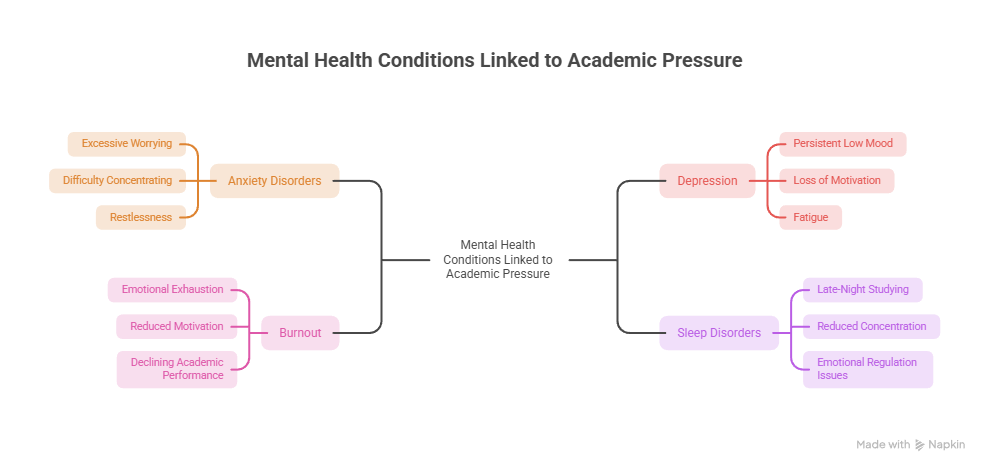
Prolonged academic pressure can contribute to several mental health conditions. Although pressure alone does not always cause these conditions, it can increase the risk, particularly when combined with other personal or environmental factors.
Anxiety Disorders
Academic pressure commonly contributes to anxiety. Students may constantly worry about examinations, grades, deadlines, or disappointing others. Symptoms can include excessive worrying, difficulty concentrating, restlessness, rapid heartbeat, and trouble sleeping.
When anxiety becomes persistent and begins interfering with daily life, professional support may be necessary.
Depression
Continuous pressure without adequate support can also contribute to depression in some students. Depression extends beyond temporary sadness. It often involves persistent low mood, loss of motivation, fatigue, changes in appetite, sleep disturbances, and difficulty enjoying once pleasurable activities.
Students experiencing these symptoms should speak with a trusted adult or qualified mental health professional.
Burnout
Academic burnout occurs after prolonged periods of stress and overwork. Burnout often causes emotional exhaustion, reduced motivation, declining academic performance, and feelings of detachment from school.
Unlike temporary tiredness, burnout usually requires meaningful rest and changes to study habits before recovery begins.
Sleep Disorders
High pressure frequently affects sleep quality. Students may stay awake worrying about assignments or spend late nights studying. Poor sleep then reduces concentration, memory, and emotional regulation, creating additional pressure the following day.
This cycle becomes increasingly difficult to break without healthy sleep habits.
Recognizing the Warning Signs
Students should pay attention to early warning signs before pressure becomes overwhelming.
Common indicators include:
- Constant fatigue despite adequate rest
- Difficulty concentrating during classes
- Frequent headaches or muscle tension
- Irritability or mood swings
- Loss of motivation
- Declining academic performance
- Difficulty sleeping
- Withdrawing from friends or family
Recognizing these symptoms early allows students to make adjustments before the situation becomes more serious.
Improve Time Management to Reduce Pressure
Effective time management remains one of the best ways to reduce academic pressure.
Instead of viewing every assignment as equally urgent, organize tasks according to deadlines and importance. Breaking large projects into smaller sections makes them feel more manageable.

A weekly study schedule also helps distribute work evenly throughout the semester. Rather than studying for several hours before an examination, regular revision sessions improve understanding while reducing stress.
Consistency usually produces better results than occasional intensive study sessions.
Set Realistic Expectations
Many students unintentionally increase pressure by expecting perfection.
Academic excellence is a worthwhile goal, but perfection is rarely achievable. Every student has strengths and weaknesses, and occasional setbacks are part of learning.
Instead of aiming to outperform everyone else, focus on improving your own understanding and developing better study habits. Progress measured against your previous performance is often a healthier indicator of success than constant comparison with classmates.
Realistic expectations create sustainable motivation.
Build Healthy Daily Habits
Physical health directly influences academic performance and emotional well-being.
Students should prioritize:
- Seven to nine hours of sleep each night
- Balanced meals throughout the day
- Regular physical activity
- Adequate hydration
- Short breaks during study sessions
Exercise deserves particular attention because it reduces stress hormones while increasing chemicals that improve mood and concentration.
Simple daily habits often produce significant long-term improvements.
Make Time for Recreational Activities
Studying continuously without recreation increases pressure rather than reducing it.
Engaging in enjoyable activities allows the mind to recover. Reading for pleasure, photography, drawing, music, sports, gardening, or spending time outdoors can improve emotional well-being and restore motivation.
Social interaction is equally important. Spending time with supportive friends and family provides emotional balance and reminds students that their identity extends beyond academic performance.
Healthy recreation should be viewed as part of effective learning rather than a distraction from it.
Practice Healthy Coping Strategies
Students benefit from developing practical methods for managing pressure before stressful situations arise.
Helpful coping strategies include:
- Deep breathing exercises before examinations
- Mindfulness or meditation
- Keeping a daily journal
- Setting achievable daily goals
- Celebrating small accomplishments
- Taking regular study breaks
These techniques do not eliminate pressure, but they improve emotional resilience and help students respond more calmly to academic challenges.
Ask for Support Without Hesitation
Seeking help is a sign of responsibility, not weakness.
Teachers can clarify difficult subjects, classmates can provide collaborative learning opportunities, and family members can offer encouragement.
If academic pressure begins affecting mental health, students should consider speaking with a school counselor, psychologist, or another qualified mental health professional. Early support often prevents minor difficulties from becoming more serious problems.
No student should feel obligated to manage overwhelming pressure alone.
Create a Positive Learning Environment
Your surroundings influence your mindset.
Maintain an organized study area with minimal distractions. Reduce unnecessary phone notifications during study sessions and keep study materials easily accessible.
Surround yourself with classmates who encourage learning instead of unhealthy competition. Positive relationships create an atmosphere where growth feels achievable rather than intimidating.
A supportive environment reduces unnecessary pressure while improving concentration.
Personal thoughts
Being confined in a rat race of academics can feel suffocating. The constant comparison, parental expectations, and the fear of breaking such expectations, the fear of not living up to your potential,l and the paranoia that comes with failure. It’s all justified, ed but those fears aren’t meant to be permanent.
You should just remember that all life is equally important but differently valued. And academics are a way to proveyourselfl,f but there are other ways as well. Those include pursuing your hobbies.
You may not prove yourself by doing such activities, but at least they’ll act as remedies for all the fatigue from the excess mental pressure.



Leave a Reply