
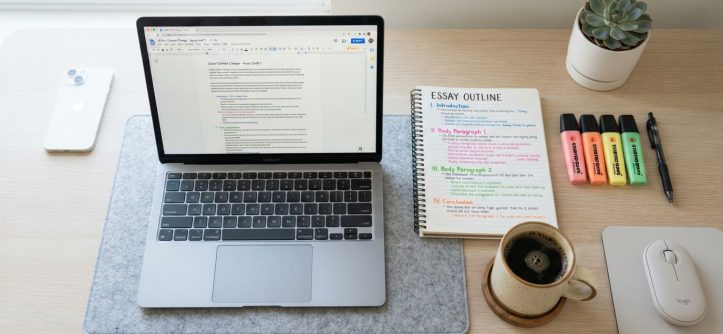
You improve your writing skills for assignments and exams by practicing with feedback, studying strong examples, and building specific habits around planning, clarity, and revision. It’s not about talent. Writing is a skill you build through repetition, the same way you’d build any other skill.
A lot of students think good writers were just born that way. That’s rarely true. Most strong writers got there through deliberate practice, often with a fair amount of trial and error along the way. The frustrating part is that school rarely teaches the specific habits that actually move the needle. Students end up guessing at what “better writing” even means. Mastering essay structure is only half the battle; pairing structured drafting with the Best Learning Techniques Backed by Research (2026 Guide) ensures you retain information and write with clarity under exam pressure
This guide breaks down exactly what to practice and how. It covers timed exam essays and longer take-home assignments, since both need slightly different approaches.
Why Most Students Plateau at the Same Writing Level
Students plateau because they keep practicing the same habits instead of targeting specific weaknesses. Repetition without feedback doesn’t actually improve anything. Writing the same five-paragraph essay format over and over doesn’t teach you anything new. It just reinforces whatever habits you already have, good or bad.
The other major reason students plateau is a lack of specific feedback. Getting a grade back with no real explanation tells you almost nothing about what to fix. Real improvement requires knowing exactly which sentences were unclear, which arguments were weak, and why. Without that information, you’re essentially practicing blind.
Breaking through a plateau usually means slowing down and focusing on one specific skill at a time. Instead of trying to fix everything in one draft, work on sentence clarity this week and argument structure the next. Trying to improve everything at once tends to improve nothing.
How to Plan Your Writing Before You Start
Strong writing starts with a clear plan, not a blank page and good intentions. Even five minutes of planning can save you significant time during revision. It can also dramatically improve the final structure.

Build a Simple Outline First
Before writing a single sentence, jot down your main argument and two or three supporting points. This doesn’t need to be formal. A few bullet points are enough to keep you from wandering off topic halfway through. Writers who skip this step often end up with essays that meander, because they’re figuring out their argument as they go instead of before they start.
Know Your Thesis Before You Write the Introduction
Your thesis, or main argument, should be clear in your own head before you write your opening paragraph. Trying to write an introduction before you know exactly what you’re arguing usually produces a vague, wishy-washy opening. Write your thesis first, even as a rough sentence. Then build the introduction around it.
Plan for Timed Exams Differently Than Take-Home Assignments
In a timed exam, spend the first few minutes outlining instead of diving straight into writing. It feels like wasted time under pressure, but it isn’t. A rushed essay without a plan almost always runs out of steam by the final paragraph. Take-home assignments give you more room to draft loosely first and organize later. Even then, a rough outline saves you from major structural rewrites.
How to Write Sentences That Are Clear and Direct
Clear sentences communicate one idea at a time, using simple structure and specific words instead of vague, padded phrasing. Clarity is one of the fastest things to improve, and one of the most noticeable to a grader or reader.
A common problem is cramming too many ideas into a single sentence, which forces the reader to work harder than they should. If a sentence has more than two commas, it’s often a sign to split it into two shorter sentences instead. Short sentences aren’t a weakness. They’re often the clearest way to communicate a complex idea.
Vague language is another common issue. Words like “things,” “stuff,” “very,” and “a lot” usually signal that a more specific word was available and simply wasn’t used. Instead of “the experiment showed a lot of interesting things,” try naming the actual finding. Specificity almost always makes writing stronger, and it’s one of the easiest fixes to apply during revision.
How to Strengthen Arguments and Evidence in Academic Writing
A strong argument states a clear claim and backs it up with specific, relevant evidence, not just general statements that sound convincing. Vague claims without support are one of the most common reasons essays lose points, even when the writing itself is technically clean.
Every paragraph should do one clear job: introduce a point, support it with evidence, and explain why that evidence matters. Skipping that last step, the explanation, is a common mistake. Students often assume the connection between evidence and argument is obvious. But a reader who isn’t inside your head needs it spelled out.
It also helps to anticipate counterarguments, even briefly. Acknowledging an opposing view and explaining why your position still holds shows a deeper level of thinking than an essay that only presents one side. This matters even in shorter assignments and exam essays. A single sentence addressing a counterpoint can noticeably strengthen the overall argument.
How to Revise Your Own Writing Effectively
Effective revision means reading your work as if someone else wrote it. Look specifically for gaps in logic, unclear sentences, and weak transitions. Revision is a different skill from writing a first draft, and treating them as the same step is a common mistake.
One practical technique is reading your work out loud. Awkward phrasing and run-on sentences are much easier to catch by ear than by eye, since your brain tends to smooth over errors silently while reading. If a sentence is hard to say out loud in one breath, it’s probably too long or too tangled.
Another useful approach is checking each paragraph against a single question: what is this paragraph actually doing for my argument? If you can’t answer that clearly, the paragraph likely needs to be cut, combined with another, or rewritten with a clearer purpose. This kind of structural revision tends to matter more than fixing individual word choices, though both are worth doing.

An Overlooked Strategy: Read Like a Writer, Not Just a Reader
Most advice on improving writing focuses entirely on the writing itself: outlining, revising, practicing. But one of the most effective ways to improve is reading other writing differently. Analyze how it’s built instead of just consuming the content.
When students read a strong essay or article, they usually focus on what it says, not how it says it. Reading like a writer means pausing occasionally to ask specific questions. How did this writer open the piece to hook the reader? How do the paragraphs connect to each other? Where does the argument shift, and how did the writer signal that shift to the reader? This kind of close, structural reading trains your brain to notice techniques you can borrow for your own writing.
A practical way to build this habit is picking one strong piece of writing and outlining its structure after reading it. It could be an essay, an article, or even a well-written textbook passage. Map out the main claim, the supporting points, and how each paragraph connects to the next. This reverse-engineering exercise often teaches more about structure and argument-building than hours of independent drafting, because you’re studying a version of the skill that already works.
Frequently Asked Questions
How can I improve my writing quickly before an exam?
Focus on planning and clarity rather than trying to overhaul your entire writing style in a short period. Spend a few minutes outlining before you write, keep sentences direct, and make sure every paragraph clearly supports your main argument.
Does reading more actually improve writing skills?
Yes, but only if you read attentively rather than passively. Reading with attention to structure, argument, and sentence choices tends to improve writing far more than casual reading alone.
How important is grammar compared to structure and argument?
Grammar matters, but structure and argument quality usually have a bigger impact on your overall grade or impression. A grammatically perfect essay with a weak argument will typically score lower than a well-argued essay with a few minor grammar slips.
Should I write differently for exams versus take-home assignments?
Yes, exam writing generally needs to be more direct and tightly planned, since there’s little time for extensive revision. Take-home assignments allow for more exploration in early drafts, since you have time to revise and restructure afterward.
How can I get useful feedback if my teacher only gives a grade?
Ask a specific question when requesting feedback, like “which paragraph was the weakest and why,” instead of a general “how can I improve.” Peers, writing centers, and even reading your own work out loud can also surface issues that a simple grade won’t reveal.
Conclusion
Improving your writing for assignments and exams comes down to a handful of practical habits. Plan before you write, keep sentences clear, back up arguments with real evidence, and revise with a critical eye. Add in reading like a writer instead of a passive reader, and you’ll start noticing techniques you can apply to your own work almost immediately. Pick one habit from this guide to focus on first, practice it consistently, and build from there.




Leave a Reply