

Freelancing is one of the fastest-growing ways of working in today’s digital economy. Instead of being employed by a single company, freelancers offer their skills and services to multiple clients on a project or contract basis. This work model gives individuals greater control over their time, income, and career direction.
With remote work becoming more common, freelancing has moved from a side option to a mainstream career choice. Students, professionals, and even businesses now rely on freelancing as a flexible and efficient way to work. But what exactly is freelancing, and how does it work in practice? This article explains the concept in detail, along with its benefits, challenges, and future potential.
Understanding Freelancing in Simple Terms
At its core, freelancing means working independently rather than being tied to a long-term employer. A freelancer completes tasks or projects for clients and gets paid for the work delivered. These projects may last a few hours, weeks, or even months, depending on the agreement.
Freelancing differs from traditional employment in several ways. Freelancers are responsible for finding their own clients, managing their schedules, setting rates, and handling taxes. In exchange, they enjoy flexibility and autonomy that regular jobs often lack.
How It Works
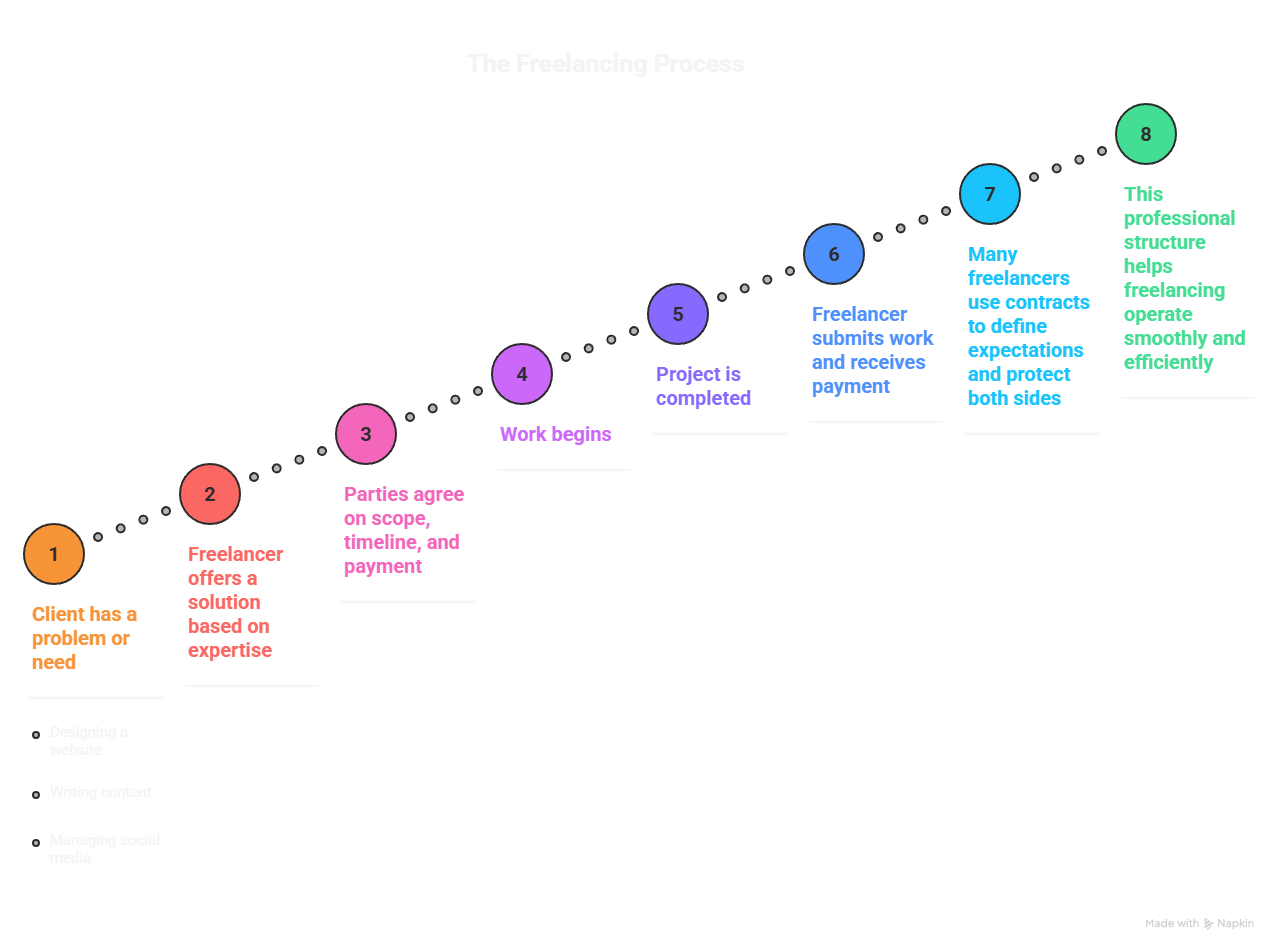
Freelancing usually follows a clear process. A client has a problem or need, such as designing a website, writing content, or managing social media. The freelancer offers a solution based on their expertise. Both parties agree on scope, timeline, and payment before the work begins.
Once the project is completed, the freelancer submits the work and receives payment. Many freelancers use contracts to define expectations and protect both sides. This professional structure helps freelancing operate smoothly and efficiently.
Popular Types of Freelance Work
Freelancing exists across many industries, especially those that rely on digital skills. Some of the most common freelancing fields include:
- Content writing and copywriting
- Graphic design and branding
- Web development and programming
- Digital marketing and SEO
- Video editing and animation
- Virtual assistance and administrative support
However, freelancing is not limited to online work. Consultants, photographers, tutors, and trainers also operate as freelancers in both physical and virtual environments.
Why Freelancing Is Becoming So Popular
The rise of freelancing is not accidental. Several global trends have made it more appealing than ever.
First, technology has removed location barriers. Freelancers can work with clients from anywhere in the world. Second, companies prefer hiring freelancers for specialized tasks instead of maintaining full-time staff. Third, individuals value flexibility more than traditional job security.
Freelancing allows people to design their careers around their lifestyle, not the other way around.
Benefits of Freelancing

One of the biggest advantages of freelancing is freedom. Freelancers choose who they work with, when they work, and how much they work. This level of control is rare in traditional employment.
Another benefit is income potential. Unlike fixed salaries, freelancing income can grow as skills improve and demand increases. Many freelancers raise their rates over time or diversify their services.
Freelancing also encourages continuous learning. Since the market is competitive, freelancers constantly upgrade their skills to stay relevant. This habit leads to long-term professional growth.
Challenges of Freelancing
Despite its advantages, freelancing is not without challenges. One of the most common difficulties is income instability. Work may fluctuate, especially in the beginning.
Freelancers are also responsible for their own taxes, health insurance, and retirement planning. This requires discipline and financial awareness. Additionally, freelancers must manage time effectively, as there is no employer enforcing schedules.
Loneliness can also be an issue, especially for those working remotely. However, many freelancers overcome this by joining communities, coworking spaces, or online networks.
Skills Needed to Succeed
Successful freelancing requires more than technical ability. While professional skills are essential, soft skills play an equally important role.
Communication is critical. Freelancers must understand client needs, ask the right questions, and provide updates. Time management helps ensure deadlines are met without burnout. Problem-solving skills allow freelancers to adapt when projects change.
Self-discipline is perhaps the most important skill. Since freelancing offers freedom, it also demands responsibility.
How to Start Freelancing
Starting freelancing does not require a large investment. Many freelancers begin with skills they already have and improve as they gain experience.
The first step is identifying a marketable skill. The next is building a simple portfolio that demonstrates your work. After that, freelancers can find clients through online platforms, social media, or personal networks.
Pricing should be realistic at the beginning. As experience grows, freelancers can gradually increase rates. Consistency and professionalism are key during the early stages.
Platforms and Opportunities

Many freelancers find work through online platforms that connect clients and service providers. These platforms help beginners gain experience and exposure.
However, long-term success in freelancing often comes from building direct client relationships. Personal branding, referrals, and repeat clients provide stability and growth over time.
Freelancing is not just about finding work, it is about building trust and reputation.
Long-Term Career
For many people, freelancing starts as a side hustle and evolves into a full-time career. With experience, freelancers can specialize in niches, form agencies, or offer premium services.
Some freelancers transition into consulting, teaching, or product-based businesses. The skills developed through freelancing. Communication, adaptability, and independence are valuable in any career path.
Freelancing is not a shortcut to success, but it is a flexible and scalable career option.
The Future of Freelancing
The future of freelancing looks strong. As remote work becomes normal and businesses prioritize flexibility, demand for freelancers continues to grow.
Technology will further support freelancing through automation, collaboration tools, and global payment systems. Those who invest in skill development and professionalism will benefit the most.
Freelancing is no longer an alternative as it is a fundamental part of the modern workforce.
Final Thoughts
Freelancing is a work model built on independence, flexibility, and skill-based value. It allows individuals to take control of their careers while offering businesses efficient solutions. Although it comes with challenges, freelancing rewards those who are disciplined, adaptable, and committed to growth.
Whether you are a student, professional, or entrepreneur, freelancing offers opportunities to learn, earn, and evolve. With the right mindset and preparation, freelancing can become not just a job, but a sustainable and fulfilling career.
Popular freelancing sites
Fiverr
Upwork
(FAQ)
1. What is freelancing?
Freelancing is a type of self-employment where individuals offer services to clients on a project or contract basis instead of working as full-time employees for one company.
2. How does freelancing work?
Freelancers find clients, agree on project terms, complete the work, and receive payment. They are responsible for managing their own schedule, pricing, and workload.
3. What skills are needed for freelancing?
Skills vary by field, but common freelance skills include writing, graphic design, web development, digital marketing, video editing, translation, and programming. Communication and time management are also essential.
4. Where can I find freelance jobs?
Freelancers often find work through platforms like Upwork, Fiverr, and Freelancer.com, as well as LinkedIn, personal websites, and direct client outreach.
5. How much can a freelancer earn?
Earnings depend on skill level, experience, demand, and pricing strategy. Some freelancers work part-time for extra income, while others build full-time, high-earning careers.
6. Is freelancing better than a regular job?
It depends on personal preference. Freelancing offers flexibility and independence, while traditional jobs provide stability and fixed benefits. Both have advantages and challenges.
7. Do freelancers pay their own taxes?
Yes. Freelancers are typically responsible for managing their own taxes, invoices, and financial records according to their country’s regulations.
8. Can students start freelancing?
Yes. Many students begin freelancing to gain experience and earn income while studying. It can also help build a strong portfolio before graduation.
9. What are the challenges of freelancing?
Common challenges include inconsistent income, finding clients, handling competition, and managing time effectively.
10. How do I start freelancing as a beginner?
Start by identifying a skill, building a portfolio, creating profiles on freelance platforms, setting competitive prices, and gradually improving your expertise through practice and feedback.


Leave a Reply